


Wed, Jul 15, 2026
How to Minimize Pores & Make Your Makeup Look Flawless

We've all been there: You do your makeup, look in the mirror, and see foundation settling right into your pores. Your first instinct is probably to grab a thick primer or pack on the powder to cover it up. But piling on heavy layers just makes the texture stand out more.
I talk clients off the ledge about their skin texture every single day. The truth is that "poreless" skin is an illusion—thanks, influencers! But that doesn't mean you can't achieve a smooth, seamless finish on your own (sans filter).
If you want to know how to minimize pores for a smooth, airbrushed look, it all comes down to strategic skin prep, professional application techniques, and using the right tools.
Step 1: Cleanse, plump, and protect
You can't fake a smooth canvas if your skin is dry or congested underneath. Proper prep is the only way to make your makeup float over your pores instead of sinking right into them.
- Wash (but don't scrub): Clogged pores naturally stretch out and look much wider. Cleansing your face twice a day controls oiliness and prevents clogging. Always wash with warm water (read: NOT hot water) and avoid aggressive scrubbing.
- Plump with hydration: When your skin is dehydrated, your pores look deflated and cavernous. Flooding your skin with lightweight, oil-free hydration plumps up the surrounding tissue and visually minimizes the size of the pores.
- Wear SPF: UV rays break down the natural collagen and firmness around your pores, which can cause them to sag and stretch open over time. Protect your skin's elasticity by wearing a broad-spectrum SPF 30 or higher every single day.
Step 2: Choose the right tools
Your foundation is only as good as the brush you apply it with. To hide texture, you have to stop using flimsy bristles that just push product around your face.
Here's what needs to be in your kit:
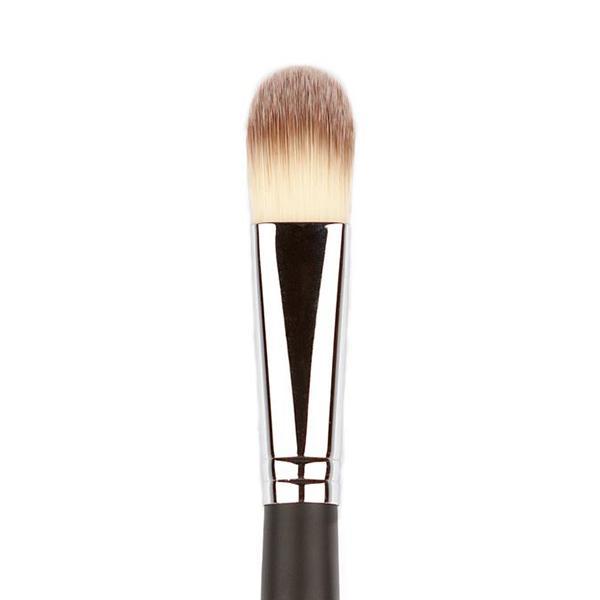
- Elaina Badro Foundation Brush or Luxury Beauty Sponge: I rely on these because they have the exact density required to melt liquid or cream bases right into your skin. You get the coverage you want without creating a thick, cakey layer.
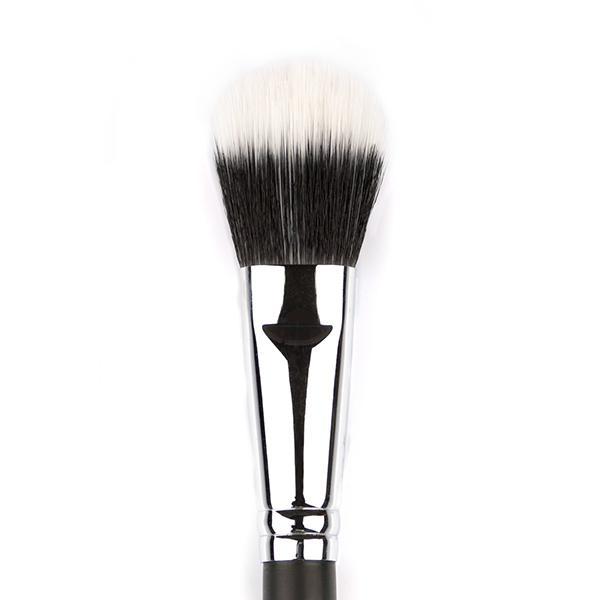
- Elaina Badro Duo Fiber Brush: This is basically a real-life blur filter. I engineered these stippling fibers specifically so you have total control over your placement and can diffuse the edges of your makeup seamlessly.
- Elaina Badro Powder Brush: A good powder application shouldn't ruin the liquid base you just spent time perfecting. This tool lets you press your setting powder exactly where you need it without dragging or lifting the makeup underneath.

Step 3: Apply like a pro
If you drag or swipe your foundation, you're doing it wrong. Wiping pigment across an enlarged pore creates a shadow that highlights how deep the pore is.
What you need to do is press and roll. Grab your sponge or foundation brush and bounce your non-comedogenic makeup right into the skin. Focus directly on the areas where pores are most prominent, like the cheeks and nose. Stippling pushes the foundation evenly into your texture instead of just scraping it across the top.
Take your Duo Fiber Brush and use a light, circular buffing motion with feather-light pressure. Don't smear or rub. Just let the bristles seamlessly blur the edges of your foundation without micro-exfoliating any dry patches.
Finally, take your Powder Brush and lightly press a finely milled, translucent powder into your T-zone. Pressing the powder, rather than aggressively dusting it on, sets the makeup without pulling it right back out of your pores.
Expert FAQ: Your Top Pore and Texture Questions Answered
| The Question | The Professional Answer |
|---|---|
Is it possible to shrink your pores permanently? |
No. Your actual pore size is genetic, so they aren't going anywhere. But you can fake it. The trick is keeping the gunk out of them, keeping your face super hydrated, and never skipping your SPF. Sunscreen protects the collagen that keeps your skin firm, which naturally keeps your pores looking tight. |
Why do my pores look bigger when I wear foundation? |
It usually boils down to bad technique. Wiping foundation across your cheeks just pushes the pigment into the rims of your pores. It acts like a magnifying glass for your texture. Add in a foundation packed with heavy oils or a shimmery finish, and you're just asking to highlight every bump on your face. |